

Program
Take the next step toward large animal veterinary specialization with the University of Saskatchewan’s Large Animal Specialty Veterinary Internship. This practical, hands-on program is designed for Doctor of Veterinary Medicine (D.V.M.) graduates who want to build a strong foundation for advanced training.
Why choose USask for the Large Animal Specialty Veterinary Internship?
- Train at the Western College of Veterinary Medicine with over 50 years of experience in large animal clinical training.
- One-year paid clinical training so you earn while gaining advanced hands-on experience.
- Recognized graduate credential that strengthens your academic profile and supports your path to competitive residencies.
Quick facts
-
Expected Length Thesis-based Course-based G.Cert. 1 year - Certificate requirements
- Class delivery in-person
- Supervisor not applicable
- Deadlines and admission details below
Gamechangers in large animal veterinary care
Train at USask in a collaborative clinical environment where you will gain advanced skills and ethical expertise to improve the health of large animals.
Graduate Certificate in Large Animal Specialty Veterinary Internship
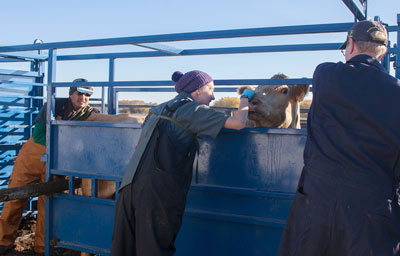
During this program, students will develop skills, knowledge and clinical experience in one of the following specialties:
- Large Animal Medicine
- Large Animal Surgery
- Theriogenology
- Equine Field Service
- Food Animal Field Service
Students will also be trained in communications and public speaking through seminars. The broad range of knowledge gained through this certificate will prepare students for clinical residency and graduate degree training programs for further board certification in a specialty.
Faculty
You do not need to identify a research supervisor for this program. You may however, be interested in the research interests of our faculty.
| Name | Research areas |
|---|---|
| Equine gastrointestinal surgery; equine laparoscopy; anastomotic healing | |
| Computer-assisted ultrasound image analysis; low dose insemination; semen cryopreservation; fertility of frozen semen; breeding-induced inflammation | |
| Cattle lameness; bovine infectious disease; clinical pharmacology | |
| Food animal reproduction: uterine immunity and fertility||Novel immuno-modulation therapies||Estrus synchronization||Oocyte maturation||Semen quality||Cryopreservation | |
| Swine health | |
| Zoonotic diseases; public health; epidemiology | |
| Beef cattle production health; vaccination and nutritional management for herd productivity | |
| Swine health; porcine circovirus type 2 (PCV2); fetal immunology; post-natal health of swine | |
| Bovine mastitis and other dairy cattle diseases | |
| Equine acupuncture; advanced reproductive techniques; subfertility/infertility in mares and stallions | |
| Animal behaviour; physiology and metabolism to optimize the balance between animal welfare; health and productivity | |
| Swine behaviour and welfare | |
| Equine surgery | |
| Epidemiology; food animal medicine; zoonotic protozoa; livestock management | |
| Infectious disease and environmental epidemiology; antimicrobial resistance; statistical and simulation modelling; Bayesian and spatial analysis |
Tuition and funding
Funding
The College of Western Veterinary Medicine will provide salary support for qualified students. Further, a fellowship is available from the College to cover a portion of tuition costs for both Canadian and international students.
Tuition and fees
Course-based master's, certificate or postgraduate diploma program
Students in course-based certificate, master's, and postgraduate diploma programs are assessed tuition per credit unit based on the number of classes they take. A typical 3-credit-unit class costs three times the per-credit-unit rate. Students not enrolled in classes must register in Maintenance of Status and are assessed tuition at the 3-credit-unit rate.
| Canadian students | International students | |
|---|---|---|
| Maintenance of Status course | ||
| Cost per graduate credit unit | ||
| Cost per 3 credit unit graduate class |
Student fees
In addition to tuition above, students also pay fees for programs like health and dental insurance, a bus pass, and other campus services. The amount you need to pay depends on if you are taking classes full time or part time, and if you are on campus or not. The table below assumes you are on campus full-time.
| Fall 2026 | Winter 2027 | Spring 2027 | Summer 2027 | |
|---|---|---|---|---|
| Student fees | $617.36 CAD | $854.96 CAD | $46.75 CAD | $46.75 CAD |
Tuition is typically billed and due in instalments, four times per year. Tuition information is accurate for the current academic year and does not include student fees. For detailed tuition and fees information, visit the official tuition website.
Admission requirements
Graduate Certificate (G.Cert.)
Applicants must be accepted for an internship to be eligible for admission to the certificate program.
- A Doctor of Veterinary Medicine (D.V.M.), or equivalent, from a recognized college or university.
- A cumulative weighted average of at least a 70% (USask grade system equivalent) The cumulative weighted average will be calculated based on the most recently completed graduate-level degree or 60 graded credit units (i.e., the last two years of full-time graded coursework) at the time of application.
- Eligibility for educational licensure with the Saskatchewan Veterinary Medical Association, to practice veterinary medicine in Saskatchewan.
- Language Proficiency Requirements: Proof of English proficiency may be required for applicants to graduate programs. Proof of English proficiency may be shown by one of the following:
- A minimum of three consecutive years of full-time study or completion of a graduate degree at a recognized post-secondary institution, where the exclusive language of instruction and examination of the program and/or institution is English.
- Provision of evidence of English language proficiency, using one of the approved tests listed in the English Language Proficiency Policy.
Application process and deadlines
Deadlines and important dates
Deadlines and important dates can be found on virmp.org
Submit an online application
International Students - Master’s and doctoral students applying for a study permit do not need a Provincial Attestation Letter (PAL). Certificate and Postgraduate Diploma students, as well as Visiting Research students studying over six months, still need a PAL. Review federal international study permit policies before you apply.
Interested students can begin an application through the American Association of Veterinary Clinicians Veterinary matching program (VIRMP - Veterinary Internship and Residency Matching Program). We typically offer four internship opportunities each year.
Once you have been successfully matched to this program, you will be asked to bring a formal application to the University of Saskatchewan. Further details will be provided at that time.
Please contact the department below if you have any questions at all about this program or how to apply.
Contact
Department of Large Animal Clinical Sciences
52 Campus Drive
University of Saskatchewan
Saskatoon, SK S7N 5B4
Graduate Program Coordinator
Jackie Gabriel
Email: jackie.gabriel@usask.ca
- Large Animal Clinical Sciences
Learn more about the academic unit offering this program - Program and Course Catalogue
To view official admission and program requirements