

Program
Veterinary Biomedical Sciences at the University of Saskatchewan immerses students in a dynamic research environment spanning whole-animal physiology to molecular and cellular biology, preparing them to excel as innovative scientists, educators, and leaders in animal and biomedical research.
Why choose USask for Veterinary Biomedical Sciences?
- Work with renowned faculty across a broad spectrum of biomedical and veterinary research.
- Benefit from a low faculty-to-student ratio that supports personalized mentorship and research development.
- Engage in hands-on research involving diverse species—from livestock and laboratory animals to wildlife and exotics.
- Build deep scientific expertise through a blend of independent research and focused coursework.
Quick facts
-
Expected length Thesis-based Course-based M.Sc. 2 years Ph.D. 4 years - Degree requirements
- Class delivery in-person
- Supervisor approval recommended before applying
- Deadlines and admission details below
Investigators driving breakthroughs in animal health and biomedical research
From whole-animal systems to molecular pathways, your research will uncover new insights that enhance animal wellbeing, strengthen food systems, and deepen our understanding of life at every scale.
Veterinary Biomedical Sciences master's and Ph.D. research areas
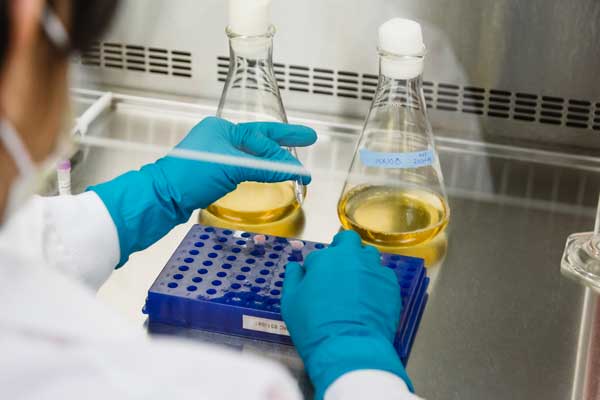
The Department of Veterinary Biomedical Sciences leads research spanning whole‑animal physiology to molecular, cellular, and biochemical mechanisms. Our faculty investigate fundamental, applied, and clinical questions across a wide range of species—including livestock, laboratory animals, wildlife, fish, and exotic species—to advance animal health and inform biomedical science.
Key research areas include:
- Cardiovascular and stress physiology: mechanisms regulating circulatory function, stress responses, and adaptation.
- Gastrointestinal biochemistry and nutrition: digestive physiology, nutrient utilization, and metabolic health.
- Toxicology and pulmonary pathobiology: mechanisms of toxicity, environmental exposures, and respiratory disease.
- Neuroscience and pharmacology: neural regulation, neurobiology of disease, and therapeutic interventions.
- Reproductive physiology and endocrinology: reproductive biology, hormonal regulation, and developmental processes.
- Biotechnology and molecular biology: cellular mechanisms, molecular tools, and translational applications in animal and human health.
Research supervisors
Before applying, we recommend contacting a potential supervisor whose research areas align with your interests. Share your academic background and research goals. If they are accepting students, they will instruct you to begin a formal application.
| Name | Research areas |
|---|---|
| Neuroscience, heavy metal neurotoxicity | |
| Reproductive sciences | |
| Pharmacokinetics and pharmacodynamics | |
| Mycotoxin exposure in livestock, epidemiology of common veterinary toxicoses (lead poisoning in cattle, strychnine poisoning in dogs) | |
| Reproductive biology | |
| Interactions between physiological control and environmental alteration of developmental and reproductive processes in vertebrates. | |
| Molecular Mechanisms of Neural Circuit Development | |
| Investigations of the mechanism and effects of calcium activated chloride channels as they modulate human and animal diseases. | |
| Causes, mechanisms and consequences of stress in wildlife. Pain and Analgesia in non-mammalian species. Nuclear Magnetic Resonance (NMR) spectrometry | |
| Integrin-mediated signaling in placental development. Role of small stress proteins in uterine muscle function during pregnancy. | |
| Immunochemistry; Retrograde tract-tracing; Neuroanatomical measurement and dendritic arborization | |
| Identify & characterize pathological features of vascular disease that contribute to metabolic and cognitive dysfunction and ... | |
| Biology of pulmonary intravascular macrophages; Environmental pulmonary toxicology; Cell and molecular biology of lung inflammation focusing on mechanisms of neutrophil and monocyte migration into inflamed lungs | |
| Ultrasonographic; Morphologic and biochemical kinetics of ovarian follicles to refine the bovine model | |
| Comparative Endocrinology, Metabolism, Reproduction, Diabetes, Obesity | |
| Tobacco smoke and air pollution effects on cardiovascular disease; pathophysiological mechanisms, animal models, polycyclic aromatic hydrocarbons | |
| Environmental toxicology, molecular genetics, stress biology aging. |
Tuition and funding
Funding
The University of Saskatchewan faculty supervisor must have funding for the student's proposed project. Either the student or the USask faculty supervisor must have additional funding for the student's stipend.
Graduate students at USask can receive funding from a variety of sources to support their graduate education.
Tuition and fees
Thesis or project-based master's program
Students in thesis and project-based master's programs are assessed tuition three times a year for as long as they are enrolled in their program.
| Term | Canadian students | International students |
|---|---|---|
| September 1 - December 31, 2026 | ||
| January 1 - April 30, 2027 | ||
| May 1 - August 31, 2027 | ||
| Total per academic year |
Student fees
In addition to tuition above, students also pay fees for programs like health and dental insurance, a bus pass, and other campus services. The amount you need to pay depends on if you are taking classes full time or part time, and if you are on campus or not. The table below assumes you are on campus full-time.
| Fall 2026 | Winter 2027 | Spring 2027 | Summer 2027 | |
|---|---|---|---|---|
| Student fees | $617.36 CAD | $854.96 CAD | $46.75 CAD | $46.75 CAD |
Tuition is typically billed and due in instalments, four times per year. Tuition information is accurate for the current academic year and does not include student fees. For detailed tuition and fees information, visit the official tuition website.
Doctoral program
Doctoral students are assessed tuition three times a year for as long as they are enrolled in their program. Both international and domestic PhD students pay the same rate.
| Term | |
|---|---|
| September 1 - December 31, 2026 | $1,879.00 CAD |
| January 1 - April 30, 2027 | $1,879.00 CAD |
| May 1 - August 31, 2027 | $1,879.00 CAD |
| Total per academic year | $5,637.00 CAD |
Student fees
In addition to tuition above, students also pay fees for programs like health and dental insurance, a bus pass, and other campus services. The amount you need to pay depends on if you are taking classes full time or part time, and if you are on campus or not. The table below assumes you are on campus full-time.
| Fall 2026 | Winter 2027 | Spring 2027 | Summer 2027 | |
|---|---|---|---|---|
| Student fees | $617.36 CAD | $854.96 CAD | $46.75 CAD | $46.75 CAD |
Tuition is typically billed and due in instalments, four times per year. Tuition information is accurate for the current academic year and does not include student fees. For detailed tuition and fees information, visit the official tuition website.
Admission requirements
- Language Proficiency Requirements: Proof of English proficiency may be required for international applicants and for applicants whose first language is not English
- A cumulative weighted average of at least a 70% (USask grade system equivalent) in the last two years of study (i.e. 60 credit units)
- A four-year honours degree, or equivalent, from a recognized college or university in an academic discipline relevant to the proposed field of study
- Language Proficiency Requirements: Proof of English proficiency may be required for international applicants and for applicants whose first language is not English.
- Master’s degree, or equivalent, from a recognized university in a relevant academic discipline
- A cumulative weighted average of at least a 70% (USask grade system equivalent) in the last two years of study (i.e. coursework required in master’s program)
Application process and deadlines
Deadlines and important dates
There are no application deadlines for this program. Students are accepted for the beginning of each academic term.
Submit an online application
International students - Master's and doctoral students applying for a study permit do not need a Provincial Attestation Letter (PAL). Certificate and Postgraduate Diploma students, as well as Visiting Research students studying over six months, still need a PAL. Review federal international study permit policies before you apply.
Before beginning your online application, be sure that you have carefully reviewed all program information and admission requirements on this page.
During the application, you'll be asked for:
- Personal information such as your name, address, etc.
- Contact information of your three referees
- For your letters of recommendation, two of your referees must be academic contacts, and the third may be academic or professional
- Your complete academic history from all previous post-secondary institutions
The application takes about 30 minutes to complete. You may save your application and return to it later.
At the end of the application, you will need to pay a non-refundable application fee: $125 for domestic students and $145 for international students. Your application will not be processed until payment is received.
Submit required documents
Once you've submitted your online application, you will have access to upload your required documents, and provide the contact information for your references. To do this, go to the "Supplemental Items & Documents" tab in your application.
Preliminary Statement of Marks
- Once you have submitted your application for admission and paid the application fee, you will be required to upload unofficial PDF copies of your academic transcript(s) from each post-secondary institution attended. This requirement will appear as Preliminary Statement of Marks or Additional Prelim. Statement under admission requirements on your Application Summary when you check your application status.
- The uploaded transcript can be an unofficial copy of the transcript issued by the university or college and must include a grading key/legend.
- All pages of a transcript must be uploaded as a single PDF document.
- Uploaded transcripts will be considered unofficial or preliminary. Official copies of your transcripts will be required only for applicants offered admission. This requirement will appear as Post-secondary Transcript under admission requirements on your Application Summary when you check your application status.
- Transcripts in languages other than English must be accompanied by a certified translation.
For students who are required to provide proof of English proficiency:
- Completing a relevant test with the appropriate score is required before the application deadline.
- Tests are valid for 24 months after the testing date and must be valid at the beginning of the student's first term of registration in the graduate program.
- Applicants will be required to upload a PDF copy of any required language test score. Uploaded test scores will be considered unofficial or preliminary.
- A curriculum vitae or resume
Contact
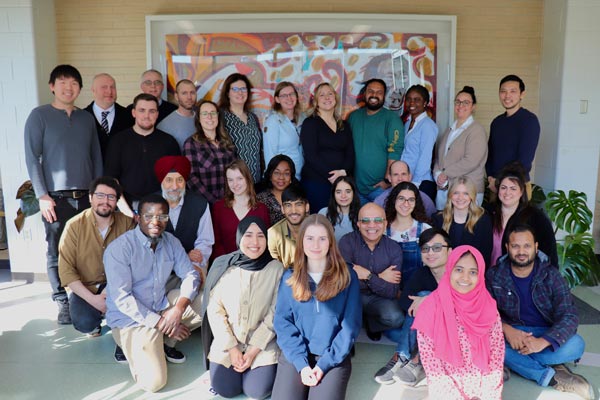
Department of Veterinary Biomedical Sciences
Rm 1301
Western College of Veterinary Medicine
University of Saskatchewan
Saskatoon, SK S7N 5B4
Graduate Co-Chair
Dr. Maud Ferrari
Email: maud.ferrari@usask.ca
Graduate Co-Chair
Dr. Adelaine Leung
Email: adelaine.leung@usask.ca
Administrative Assistant
Krista Larson
Email: krista.larson@usask.ca
Graduate Administrator
Kathy McKenzie
Email: kathy.mckenzie@usask.ca
- Department of Veterinary Biomedical Sciences
Learn more about the academic unit offering this program - Program and Course Catalogue
To view official admission and program requirements