

Program
Advance your scientific career through graduate research in veterinary pathology. The M.Sc. and Ph.D. programs provide rigorous, research-focused training in anatomic and clinical pathology, supported by expert faculty and diverse investigative opportunities. Whether you aim to build foundational research skills or pursue advanced scholarly work in disease mechanisms, these programs prepare you to contribute new knowledge to animal health and biomedical science.
Why choose USask for Veterinary Pathology?
- Learn from internationally recognized researchers working across infectious disease, immunity, oncology, wildlife health, honey bee pathology, and more.
- Gain hands-on experience in diagnostic pathology, laboratory investigation, and scholarly research, supported by outstanding facilities and specialized faculty mentorship.
Quick facts
-
Expected length Thesis-based Project-based Course-based M.Sc. 2-3 years M.Sc. - Diagnostic Pathology 3 years Ph.D. 4 years - Degree requirements
- Class delivery in-person
- Supervisor approval recommended before applying
- Deadlines and admission details below
Innovators in veterinary disease research
Join a community of emerging scientists dedicated to understanding, investigating, and advancing knowledge in animal disease, health, and pathology.
Veterinary Pathology master's and Ph.D. research areas
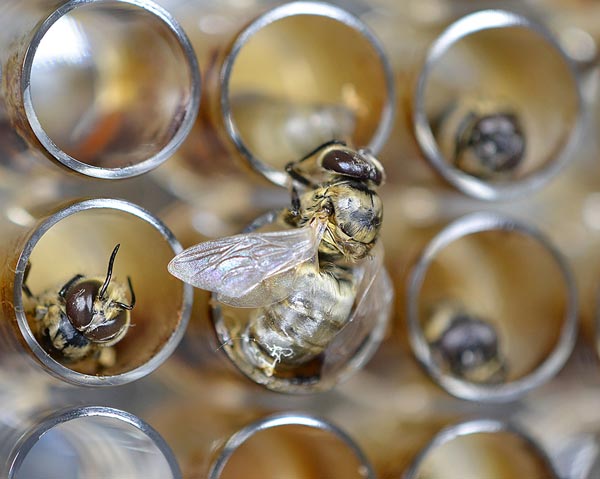
Graduate students in Veterinary Pathology work within a highly collaborative department that integrates foundational science, laboratory investigation, and comparative pathology. Research spans domestic animals, wildlife, and specialized species, allowing students to investigate disease mechanisms, host responses, and population-level health challenges. You will learn to apply scientific inquiry, develop advanced laboratory skills, and contribute new knowledge through supervised, thesis- or project-based research.
Key research areas include:
- Pathogenesis of infectious diseases: mechanisms of bacterial, viral, and parasitic disease in mammals, poultry, and wildlife.
- Mucosal and innate immunity: host defense mechanisms, immune regulation, and disease resistance.
- Oncology and viral oncogenesis: cancer mechanisms, tumour biology, and virus-associated neoplastic processes.
- Hematologic disorders: investigation of blood and bone marrow diseases and related systemic conditions.
- Wildlife diseases and ecosystem health: diagnostic investigation and field-based research supported by the Canadian Wildlife Health Cooperative.
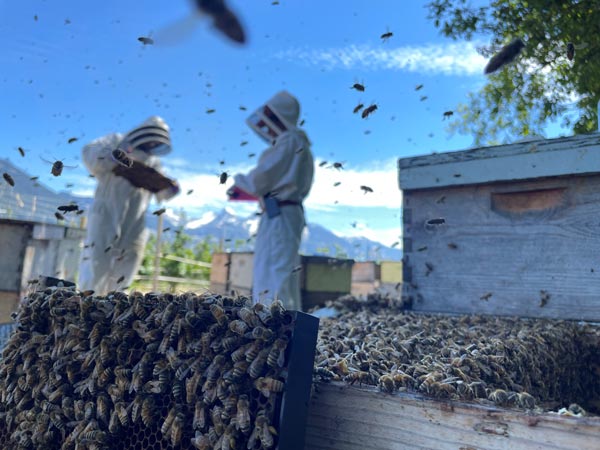
- Honey bee health and pathology: infectious diseases, colony health, and population-level pathology of managed pollinators.
- Skeletal and developmental pathology: abnormalities of bone growth, metabolic disease, and structural disorders.
Students benefit from close mentorship, diverse research models, and access to diagnostic laboratories, advanced imaging, necropsy facilities, and collaborative research groups across USask.
Program pathways and eligibility
The department offers several graduate pathways tailored to different career goals. The project-based M.Sc. and M.Sc. - Diagnostic Pathology are available only to applicants who hold a Doctor of Veterinary Medicine (D.V.M.) degree or equivalent, as these routes include substantial diagnostic training.
The research-based M.Sc. and Ph.D. programs are open to qualified applicants with or without a D.V.M., depending on academic background and supervisory availability. These degree options emphasize scientific investigation, experimental design, and scholarly research, preparing graduates for careers in academia, diagnostics, government, and biomedical science.
Research supervisors
Before applying, we recommend contacting a potential supervisor whose research areas align with your interests. Share your academic background and research goals. If they are accepting students, they will instruct you to begin a formal application.
| Name | Research areas |
|---|---|
| Anatomic Pathology, Pathology of the Skeletal System | |
| Anatomic Pathology, Wildlife Diseases, Prion Diseases | |
| Clinical Pathology | |
| Visual Literacy and Visual Diagnostic Reasoning, Cytology and Hematology Teaching | |
| Anatomic Pathology, Diseases of Poultry | |
| Anatomic Pathology, Innate Immunity and Resistance to Infectious Diseases, Honey Bee Diseases | |
| Anatomic Pathology, Oncology | |
| Anatomic Pathology, Pollinator Health |
Tuition and funding
Funding
For Canadian applicants, landed immigrants or permanent residents of Canada who hold a D.V.M. (or equivalent) degree and have passed the computer-based portion of the NAVLE, funding is available on a competitive basis from the Interprovincial Graduate Fellowship. Funding is currently at $40,000 per year. Alternative funding is available on a competitive basis to exceptional foreign applicants.
Graduate students at USask can receive funding from a variety of sources to support their graduate education.
Tuition and fees
Thesis or project-based master's program
Students in thesis and project-based master's programs are assessed tuition three times a year for as long as they are enrolled in their program.
| Term | Canadian students | International students |
|---|---|---|
| September 1 - December 31, 2026 | ||
| January 1 - April 30, 2027 | ||
| May 1 - August 31, 2027 | ||
| Total per academic year |
Student fees
In addition to tuition above, students also pay fees for programs like health and dental insurance, a bus pass, and other campus services. The amount you need to pay depends on if you are taking classes full time or part time, and if you are on campus or not. The table below assumes you are on campus full-time.
| Fall 2026 | Winter 2027 | Spring 2027 | Summer 2027 | |
|---|---|---|---|---|
| Student fees | $617.36 CAD | $854.96 CAD | $46.75 CAD | $46.75 CAD |
Tuition is typically billed and due in instalments, four times per year. Tuition information is accurate for the current academic year and does not include student fees. For detailed tuition and fees information, visit the official tuition website.
Doctoral program
Doctoral students are assessed tuition three times a year for as long as they are enrolled in their program. Both international and domestic PhD students pay the same rate.
| Term | |
|---|---|
| September 1 - December 31, 2026 | $1,879.00 CAD |
| January 1 - April 30, 2027 | $1,879.00 CAD |
| May 1 - August 31, 2027 | $1,879.00 CAD |
| Total per academic year | $5,637.00 CAD |
Student fees
In addition to tuition above, students also pay fees for programs like health and dental insurance, a bus pass, and other campus services. The amount you need to pay depends on if you are taking classes full time or part time, and if you are on campus or not. The table below assumes you are on campus full-time.
| Fall 2026 | Winter 2027 | Spring 2027 | Summer 2027 | |
|---|---|---|---|---|
| Student fees | $617.36 CAD | $854.96 CAD | $46.75 CAD | $46.75 CAD |
Tuition is typically billed and due in instalments, four times per year. Tuition information is accurate for the current academic year and does not include student fees. For detailed tuition and fees information, visit the official tuition website.
Admission requirements
- Language Proficiency Requirements: Proof of English proficiency may be required for international applicants and for applicants whose first language is not English
- A cumulative weighted average of at least 70% (U of S grade system equivalent) in the last
two years of study (e.g. 60 credit units) - A Doctor of Veterinary Medicine (D.V.M.) or equivalent, from a recognized college or university
- Eligibility for restricted, educational SVMA licensure to practice veterinary medicine in
Saskatchewan - A personal statement explaining your interest in the program and why you want to be an
anatomic or clinical pathologist (limit 1 page, single spaced)
- Language Proficiency Requirements: Proof of English proficiency may be required for international applicants and for applicants whose first language is not English
- A cumulative weighted average of at least a 70% (USask grade system equivalent) in the last two years of study (i.e. 60 credit units)
- A four-year honours degree, or equivalent, from a recognized college or university in an academic discipline relevant to the proposed field of study
- A Doctor of Veterinary Medicine (D.V.M.) or equivalent is preferred for the Master of Science (M.Sc.) in Veterinary Pathology, but not required
- Doctor of Veterinary Medicine (D.V.M.) or equivalent, from a recognized college or university
- Language Proficiency Requirements: Proof of English proficiency may be required for international applicants and for applicants whose first language is not English
- A cumulative weighted average of at least a 70% (USask grade system equivalent) in the last two years of study (i.e. 60 credit units)
- Language Proficiency Requirements: Proof of English proficiency may be required for international applicants and for applicants whose first language is not English
- Master's degree, or equivalent, from a recognized university in a relevant academic discipline
- A cumulative weighted average of at least a 70% (USask grade system equivalent) in the last two years of study (i.e. coursework required in master's program)
A Doctor of Veterinary Medicine (D.V.M.) or equivalent is preferred for the Doctor of Philosophy (Ph.D.) in Veterinary Pathology, but not required.
With the recommendation of the unit, direct entry Ph.D. admission is available to exceptionally strong students, who show great promise in terms of academic accomplishments and potential for research.
- Language Proficiency Requirements: Proof of English proficiency may be required for international applicants and for applicants whose first language is not English
- A cumulative weighted average of at least a 80% (USask grade system equivalent) in the last two years of study (i.e. 60 credit units)
- A four-year honours degree, Doctor of Veterinary Medicine (D.V.M.) or equivalent, from a recognized college or university in an academic discipline relevant to the proposed field of study
Application process and deadlines
Deadlines and important dates
Applications for diagnostic programs open September 1 and are due by October 15 with the program starting August 15 of the following year. Thesis-based applications are by supervisor invitation only and can be submitted year round.
Submit an online application
International students - Master's and doctoral students applying for a study permit do not need a Provincial Attestation Letter (PAL). Certificate and Postgraduate Diploma students, as well as Visiting Research students studying over six months, still need a PAL. Review federal international study permit policies before you apply.
Before beginning your online application, be sure that you have carefully reviewed all program information and admission requirements on this page.
During the application, you'll be asked for:
- Personal information such as your name, address, etc.
- Contact information of your three referees
- For your letters of recommendation, two of your referees must be academic contacts, and the third may be academic or professional
- Your complete academic history from all previous post-secondary institutions
The application takes about 30 minutes to complete. You may save your application and return to it later.
At the end of the application, you will need to pay a non-refundable application fee: $125 for domestic students and $145 for international students. Your application will not be processed until payment is received.
Submit required documents
Once you've submitted your online application, you will have access to upload your required documents, and provide the contact information for your references. To do this, go to the "Supplemental Items & Documents" tab in your application.
Preliminary Statement of Marks
- Once you have submitted your application for admission and paid the application fee, you will be required to upload unofficial PDF copies of your academic transcript(s) from each post-secondary institution attended. This requirement will appear as Preliminary Statement of Marks or Additional Prelim. Statement under admission requirements on your Application Summary when you check your application status.
- The uploaded transcript can be an unofficial copy of the transcript issued by the university or college and must include a grading key/legend.
- All pages of a transcript must be uploaded as a single PDF document.
- Uploaded transcripts will be considered unofficial or preliminary. Official copies of your transcripts will be required only for applicants offered admission. This requirement will appear as Post-secondary Transcript under admission requirements on your Application Summary when you check your application status.
- Transcripts in languages other than English must be accompanied by a certified translation.
For students who are required to provide proof of English proficiency:
- Completing a relevant test with the appropriate score is required before the application deadline.
- Tests are valid for 24 months after the testing date and must be valid at the beginning of the student's first term of registration in the graduate program.
- Applicants will be required to upload a PDF copy of any required language test score. Uploaded test scores will be considered unofficial or preliminary.
Contact
Department of Veterinary Pathology
52 Campus Drive
University of Saskatchewan
Saskatoon, SK S7N 5B4
Graduate Chair
Dr. Susan Detmer
Email: susan.detmer@usask.ca
Graduate Programs Co-ordinator
Angela Turner
Email: vetpath.gradstudies@usask.ca
- Department of Veterinary Pathology
Learn more about the academic unit offering this program - Program and Course Catalogue
To view official admission and program requirements