

Program
The Chemistry graduate programs at the University of Saskatchewan help students build strong knowledge in analytical, organic, inorganic, physical, and theoretical chemistry. Through focused research and work across different areas, students develop the skills they need to contribute to scientific progress and innovation.
Why study Chemistry at USask?
- Access advanced facilities like the Saskatchewan Structural Sciences Centre and the Canadian Light Source.
- Strengthen your research at a leading Canadian research university (U15).
- Join a department that connects and collaborates with other science and engineering units on campus, with international researchers and with industrial research partners.
Quick facts
-
Expected Length Thesis-based Course-based M.Sc. 2-3 years Ph.D. 4-6 years - Degree requirements
- Class delivery in-person
- Supervisor approval recommended before applying
- Deadlines and admission details below
Groundbreakers in advancing chemical discovery
Join a department with a long record of research excellence. Here, you can push boundaries, work with many collaborators, and contribute to chemistry that drives future technologies and understanding.
Chemistry M.Sc. and Ph.D. research areas
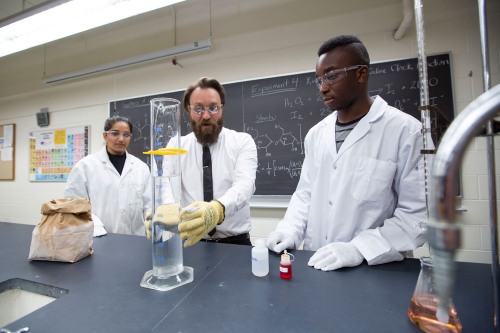
We offer M.Sc. and Ph.D. degrees in all of the major sub-disciplinary areas in chemistry (analytical, inorganic, organic, physical, theoretical). Graduate programs are tailored to the individual student and feature a strong interaction with faculty. The department has a long history of research and graduate training. More than 350 master's degrees have been awarded with the first being conferred in 1919. The first doctorate was awarded in 1952 and more than 200 Ph.D. students have subsequently graduated from the department. Many of our graduates have gone on to have distinguished careers in academia and in industry, most notably Henry Taube (Nobel Laureate, 1983; M.Sc., 1937).
While conducting research at the University of Saskatchewan, you will have access to state-of-the-art facilities such as the Saskatchewan Structural Sciences Centre and the Canadian Light Source, Canada's only synchrotron.
Research supervisors
We recommend that you contact the faculty that are doing research in an area that interests you before beginning a formal application.
| Name | Research areas |
|---|---|
| Materials; Surfaces and Nanostructures||Physical Chemistry||liquid systems||nanoparticles||soft condensed matter | |
| Materials; Surfaces and Nanostructures||Physical Chemistry||biological chemistry||charge transfer||electrochemical||molecules||nanoparticles | |
| Catalyst||inorganic chemistry||metals||organometallic | |
| Carbenes||Enantioselective Synthesis||NHC||Organic Chemistry||Organic Chemistry and Natural Products||Organocatalysis | |
| Materials Chemistry||Solid-state Inorganic Chemistry||Surface Science||X-ray Spectroscopy | |
| Analytical Chemistry||Atmospheric and environmental chemistry||Heterogenous and Multiphase reaction kinetics||Indoor Chemistry||Photochemistry||Physical Chemistry: Ice||Raman microscopy||Spectroscopy | |
| Materials; Surfaces and Nanostructures||Physical Chemistry||inorganic chemistry||materials chemistry||photovoltaic||solar cells||solar energy | |
| Materials; Surfaces and Nanostructures||Physical Chemistry||analytical chemistry||microscopy||physical chemistry||surfactants | |
| Biocatalysis||Enzymology||Inhibitor design and synthesis||Medicinal chemistry||Organic Chemistry and Natural Products||Organic chemistry||Reaction mechanisms||biological chemistry | |
| PET imaging||bio-organic chemistry||probes for imaging enzyme activity||radiochemistry | |
| Bacteria||Cancer||Inorganic chemistry||Molecular imaging||Organic chemistry||Positron emission tomography (PET)||Radiochemistry||Radiometals||Radiopharmaceuticals | |
| Carbohydrate-modifying Enzymes||Enzymology||Protein X-ray Crystallography||Structural Biology||biological chemistry||metabolism||protein-protein interactions | |
| X-ray Absorption Spectroscopy||catalysts||gold||ionic liquids||materials; surfaces; and nanostructures||nanoparticles||stabilization | |
| Coordination Chemistry||Materials Chemistry||Organometallics||Supramolecular Chemistry | |
| Dynamics and energy-transfer processes||Lasers||Molecular photophysics||Nanotechnology and DNA origami||Physical chemistry||Ultrafast optical spectroscopy | |
| Materials; Surfaces and Nanostructures||NEXAFS||Physical Chemistry||Surface Science||X-ray absorption spectriscopy||X-ray microcopy||synchrotron | |
| Biomaterials||Carbohydrates||Chemical Separations||Colloids & Surfactants||Hydration Phenomena||Hydrophobic Effect||Macromolecules||Materials & Environmental Science||Materials; Surfaces and Nanostructures||Membranes||Molecular Recognition||Physical Chemistry||Polymers||Porous Materials||Self-Assembly||Solution Chemistry||Sorption Phenomena||Water |
Tuition and funding
Funding
All eligible students will be guaranteed a stipend that may come from multiple funding sources such as research grants, scholarships, or teaching assistantships. In 2026/2027 M.Sc. students will receive a minimum of $26,500 and Ph.D. students will receive a minimum of $28,500. These stipends are conditional on academic and research progress or teaching performance if tied to a teaching assistanceship.
Financial support is guaranteed for students in good academic standing for a period of 24 months for an M.Sc. student and 56 months for a Ph.D. student.
Graduate students at USask can receive funding from a variety of sources to support their graduate education.
Tuition and fees
Thesis or project-based master's program
Students in thesis and project-based master's programs are assessed tuition three times a year for as long as they are enrolled in their program.
| Term | Canadian students | International students |
|---|---|---|
| September 1 - December 31, 2026 | ||
| January 1 - April 30, 2027 | ||
| May 1 - August 31, 2027 | ||
| Total per academic year |
Student fees
In addition to tuition above, students also pay fees for programs like health and dental insurance, a bus pass, and other campus services. The amount you need to pay depends on if you are taking classes full time or part time, and if you are on campus or not. The table below assumes you are on campus full-time.
| Fall 2026 | Winter 2027 | Spring 2027 | Summer 2027 | |
|---|---|---|---|---|
| Student fees | $617.36 CAD | $854.96 CAD | $46.75 CAD | $46.75 CAD |
Tuition is typically billed and due in instalments, four times per year. Tuition information is accurate for the current academic year and does not include student fees. For detailed tuition and fees information, visit the official tuition website.
Doctoral program
Doctoral students are assessed tuition three times a year for as long as they are enrolled in their program. Both international and domestic PhD students pay the same rate.
| Term | |
|---|---|
| September 1 - December 31, 2026 | $1,879.00 CAD |
| January 1 - April 30, 2027 | $1,879.00 CAD |
| May 1 - August 31, 2027 | $1,879.00 CAD |
| Total per academic year | $5,637.00 CAD |
Student fees
In addition to tuition above, students also pay fees for programs like health and dental insurance, a bus pass, and other campus services. The amount you need to pay depends on if you are taking classes full time or part time, and if you are on campus or not. The table below assumes you are on campus full-time.
| Fall 2026 | Winter 2027 | Spring 2027 | Summer 2027 | |
|---|---|---|---|---|
| Student fees | $617.36 CAD | $854.96 CAD | $46.75 CAD | $46.75 CAD |
Tuition is typically billed and due in instalments, four times per year. Tuition information is accurate for the current academic year and does not include student fees. For detailed tuition and fees information, visit the official tuition website.
Admission requirements
- Language Proficiency Requirements: Proof of English proficiency may be required for international applicants and for applicants whose first language is not English
- A cumulative weighted average of at least a 70% (USask grade system equivalent) in the last two years of study (i.e. 60 credit units)
- A four-year honours degree, or equivalent, from a recognized college or university in an academic discipline relevant to the proposed field of study
- Demonstrated ability for independent thought, advanced study, and research
- Language Proficiency Requirements: Proof of English proficiency may be required for international applicants and for applicants whose first language is not English.
- Master's degree, or equivalent, from a recognized university in an academic discipline relevant to the proposed field of study
- A cumulative weighted average of at least a 70% (USask grade system equivalent) in the last two years of full-time study (e.g. 60 credit units)
- Demonstrated ability for independent thought, advanced study, and research
With the recommendation of the unit, direct entry Ph.D. admission is available to exceptionally strong students, who show great promise in terms of academic accomplishments and potential for research.
- Language Proficiency Requirements: Proof of English proficiency may be required for international applicants and for applicants whose first language is not English.
- a cumulative weighted average of at least a 85% in the last two years of undergraduate study (i.e. 60 credit units of course work)
- a four-year bachelor of science degree in chemistry, or equivalent
- demonstrated ability for independent thought, advanced study, and independent research
Application process and deadlines
Deadlines and important dates
There is no set deadline for applying to this program. Applications are accepted throughout the year with programs normally starting in September. However, a start date in January or May may be possible, depending on circumstances, as determined through discussion with faculty supervisor.
Submit an online application
International students - Master's and doctoral students applying for a study permit do not need a Provincial Attestation Letter (PAL). Certificate and Postgraduate Diploma students, as well as Visiting Research students studying over six months, still need a PAL. Review federal international study permit policies before you apply.
Before beginning your online application, be sure that you have carefully reviewed all program information and admission requirements on this page.
During the application, you'll be asked for:
- Personal information such as your name, address, etc.
- Contact information of your three referees
- For your letters of recommendation, two of your referees must be academic contacts, and the third may be academic or professional
- Your complete academic history from all previous post-secondary institutions
The application takes about 30 minutes to complete. You may save your application and return to it later.
At the end of the application, you will need to pay a non-refundable application fee: $125 for domestic students and $145 for international students. Your application will not be processed until payment is received.
Submit required documents
Once you've submitted your online application, you will have access to upload your required documents, and provide the contact information for your references. To do this, go to the "Supplemental Items & Documents" tab in your application.
Preliminary Statement of Marks
- Once you have submitted your application for admission and paid the application fee, you will be required to upload unofficial PDF copies of your academic transcript(s) from each post-secondary institution attended. This requirement will appear as Preliminary Statement of Marks or Additional Prelim. Statement under admission requirements on your Application Summary when you check your application status.
- The uploaded transcript can be an unofficial copy of the transcript issued by the university or college and must include a grading key/legend.
- All pages of a transcript must be uploaded as a single PDF document.
- Uploaded transcripts will be considered unofficial or preliminary. Official copies of your transcripts will be required only for applicants offered admission. This requirement will appear as Post-secondary Transcript under admission requirements on your Application Summary when you check your application status.
- Transcripts in languages other than English must be accompanied by a certified translation.
For students who are required to provide proof of English proficiency:
- Completing a relevant test with the appropriate score is required before the application deadline.
- Tests are valid for 24 months after the testing date and must be valid at the beginning of the student's first term of registration in the graduate program.
- Applicants will be required to upload a PDF copy of any required language test score. Uploaded test scores will be considered unofficial or preliminary.
You must download and fill out the Supplemental Application Form, which is your resarch statement. Save it as a PDF and upload it once it is complete.
- Your curriculum vitae or resume should be a one or two page concise summary of your skills, experience and education.
- A curriculum vitae or resume is essentially your full academic and professional profile. It should include a summary of your educational and academic backgrounds as well as teaching and research experience, publications, presentations, awards, honours, affiliations and other details.
- Applicants will be required to upload a PDF copy of their curriculum vitae or resume.
Contact
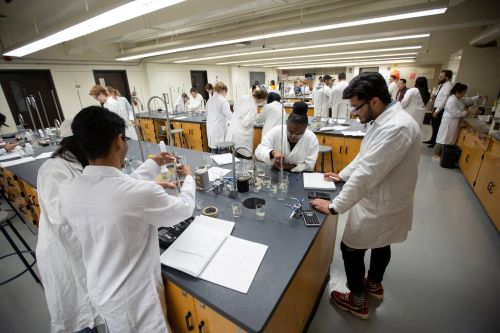
Department of Chemistry
110 Science Place
University of Saskatchewan
Saskatoon, SK S7N 5C9
Graduate Chair
Dr. Matthew Paige
Email: chem.grad.program@usask.ca
Graduate Administrator
Amber Bornhorst
Email: chem.grad.program@usask.ca
- Department of Chemistry
Learn more about the academic unit offering this program - Program and Course Catalogue
To view official admission and program requirements