

Program
USask’s Biological Psychiatry Graduate Programs (M.Sc. and Ph.D.) provide training in multiple areas of research, from molecular to advanced systems-level approaches in model systems and human studies. The program prides itself on helping students reach career goals across academia, government, and industry sectors.
Students will be able to
- Explain the biological and clinical foundations of psychiatric disorders, including standard care practices.
- Understand how genes, molecules, and cellular pathways affect brain function and psychiatric disorders across the lifespan, including mood and personality disorders, aggression, and dementias.
- Apply research techniques used in foundational and clinical research, such as 128-channel quantitative electroencephalograms (EEGs), psychosomatic evaluation tests, multi-electrode arrays (MEAs), genetic sequencing, molecular assays, and human stem cell models.
- Become skilled researchers and clinician scientists
Quick facts
-
Expected Length Thesis-based Course-based M.Sc. 2 years Ph.D. 4 years - Degree requirements
- Class delivery in-person and online
- Supervisor required to apply
- Deadlines and admission details below
A unique training environment that fosters close collaboration
In the Biological Psychiatry Graduate Programs at USask, we collaborate with foundational (bench science) researchers, practicing clinicians, and patients with lived experience, enabling us to address complex topics from multiple integrative perspectives.
Master of Biological Psychiatry
Our M.Sc. program is a thesis-based program that trains personnel in tools to understand the biological basis of human brain health and psychiatric disease. By the end of the program, graduates will have a deep theoretical and practical knowledge about the tools used in their thesis program and will be able to independently use and troubleshoot these tools. M.Sc. students will participate in critical appraisal, knowledge generation, research synthesis, and knowledge transfer. M.Sc. graduates are expected to be able to use the tools they were taught independently, explain the basis of how the tools work, and troubleshoot issues that arise. In addition, M.Sc. graduates will be expected to show a competent understanding of their field of research, demonstrating their path towards being a knowledge leader, as well as be able to explain their research to a non-expert audience. M.Sc. graduates are expected to also demonstrate exemplary writing skills. The research conducting in this program are expected to contribute to the health and well-being of individuals, families or communities.
Doctor of Philosophy in Biological Psychiatry
Our Ph.D. program is a rigorous thesis-based program that prepares personnel to become leaders that advance the academic, research and clinical practices. During this program, doctoral students will participate in critical appraisal, knowledge generation, research synthesis, and knowledge transfer. Ph.D. graduates are expected to be able to conduct research independently, be able to formulate the next logical steps in a research project, display professionalism, and demonstrate exemplary writing skills. Graduates of this program will contribute to the health and well-being of individuals, families or communities.
Graduate Program Handbook: For detailed program structure and current student expectations, please contact biological.psychiatry@usask.ca for the latest version. The handbook is updated annually.
Research supervisors
Before starting an online application, applicants must secure a College of Medicine faculty supervisor for their application to be processed. To do so, applicants should:
- Contact USask faculty whose research areas align with your interests.
- Discuss the possibility of being a student under their guidance and supervision.
- Indicate your desire to conduct research in the Biological Psychiatry program.
- Provide the faculty member with your CV, transcripts, and a short description of your research interests and career goals.
Faculty who are able to supervise new students and find that your research interests align with their work will instruct you to begin a formal application. Please note that supervisors within the College of Medicine may choose not to accept students who qualify with the minimum entrance requirements.
If you are having trouble finding a supervisor, particularly if you have a Medical Doctorate (MD), clinical psychiatry experience, a brain‑related specialty, or another undergraduate degree, you are welcome to email your CV, transcripts, and a brief summary of your research interests and career goals to biological.psychiatry@usask.ca. We can help circulate your materials to appropriate faculty.
Tuition and funding
Funding
Funding is an essential part of any graduate program. To be eligible for College of Medicine awards, as well as many external awards, applicants must have and maintain an average of at least 80%. Students who meet this requirement may be considered for the College of Medicine Graduate Student Award and the College of Medicine Travel Award. More information about these and other opportunities is available on College of Medicine Graduate Funding Initiatives.
Graduate students at USask can receive funding from a variety of sources to support their graduate education.
Tuition and fees
Thesis or project-based master's program
Students in thesis and project-based master's programs are assessed tuition three times a year for as long as they are enrolled in their program.
| Term | Canadian students | International students |
|---|---|---|
| September 1 - December 31, 2026 | ||
| January 1 - April 30, 2027 | ||
| May 1 - August 31, 2027 | ||
| Total per academic year |
Student fees
In addition to tuition above, students also pay fees for programs like health and dental insurance, a bus pass, and other campus services. The amount you need to pay depends on if you are taking classes full time or part time, and if you are on campus or not. The table below assumes you are on campus full-time.
| Fall 2026 | Winter 2027 | Spring 2027 | Summer 2027 | |
|---|---|---|---|---|
| Student fees | $617.36 CAD | $854.96 CAD | $46.75 CAD | $46.75 CAD |
Tuition is typically billed and due in instalments, four times per year. Tuition information is accurate for the current academic year and does not include student fees. For detailed tuition and fees information, visit the official tuition website.
Doctoral program
Doctoral students are assessed tuition three times a year for as long as they are enrolled in their program. Both international and domestic PhD students pay the same rate.
| Term | |
|---|---|
| September 1 - December 31, 2026 | $1,879.00 CAD |
| January 1 - April 30, 2027 | $1,879.00 CAD |
| May 1 - August 31, 2027 | $1,879.00 CAD |
| Total per academic year | $5,637.00 CAD |
Student fees
In addition to tuition above, students also pay fees for programs like health and dental insurance, a bus pass, and other campus services. The amount you need to pay depends on if you are taking classes full time or part time, and if you are on campus or not. The table below assumes you are on campus full-time.
| Fall 2026 | Winter 2027 | Spring 2027 | Summer 2027 | |
|---|---|---|---|---|
| Student fees | $617.36 CAD | $854.96 CAD | $46.75 CAD | $46.75 CAD |
Tuition is typically billed and due in instalments, four times per year. Tuition information is accurate for the current academic year and does not include student fees. For detailed tuition and fees information, visit the official tuition website.
Admission requirements
- Language Proficiency Requirements: Proof of English proficiency may be required for international applicants and for applicants whose first language is not English.
- a cumulative weighted average of at least a 70% (USask grade system equivalent) in the last two years of study (i.e. 60 credit units)
- a four-year honours degree, or equivalent, from a recognized college or university in an academic discipline relevant to the proposed field of study
- Language Proficiency Requirements: Proof of English proficiency may be required for international applicants and for applicants whose first language is not English.
- a cumulative weighted average of at least a 80% (U of S grade system equivalent) in the last two years of study (i.e. 60 credit units)
- a four-year honours degree, or equivalent, from a recognized college or university in an academic discipline relevant to the proposed field of study
Application process and deadlines
Deadlines and important dates
There is no set deadline for applying to these programs. Applications are accepted continuously, with intakes available for the September, January, and May terms.
Submit an online application
International students - Master's and doctoral students applying for a study permit do not need a Provincial Attestation Letter (PAL). Certificate and Postgraduate Diploma students, as well as Visiting Research students studying over six months, still need a PAL. Review federal international study permit policies before you apply.
Before beginning your online application, be sure that you have carefully reviewed all program information and admission requirements on this page.
During the application, you'll be asked for:
- Personal information such as your name, address, etc.
- Contact information of your three referees
- For your letters of recommendation, two of your referees must be academic contacts, and the third may be academic or professional
- Your complete academic history from all previous post-secondary institutions
The application takes about 30 minutes to complete. You may save your application and return to it later.
At the end of the application, you will need to pay a non-refundable application fee: $125 for domestic students and $145 for international students. Your application will not be processed until payment is received.
Submit required documents
Once you've submitted your online application, you will have access to upload your required documents, and provide the contact information for your references. To do this, go to the "Supplemental Items & Documents" tab in your application.
Note: Any application documents that are intended to be personal statements (e.g., Statement of Intent, Statement of Research, etc.) must be written by the applicant. Any such documents that appear to be produced by generative artificial intelligence (e.g., ChatGPT) may be rejected.
Preliminary Statement of Marks
- Once you have submitted your application for admission and paid the application fee, you will be required to upload unofficial PDF copies of your academic transcript(s) from each post-secondary institution attended. This requirement will appear as Preliminary Statement of Marks or Additional Prelim. Statement under admission requirements on your Application Summary when you check your application status.
- The uploaded transcript can be an unofficial copy of the transcript issued by the university or college and must include a grading key/legend.
- All pages of a transcript must be uploaded as a single PDF document.
- Uploaded transcripts will be considered unofficial or preliminary. Official copies of your transcripts will be required only for applicants offered admission. This requirement will appear as Post-secondary Transcript under admission requirements on your Application Summary when you check your application status.
- Transcripts in languages other than English must be accompanied by a certified translation.
For students who are required to provide proof of English proficiency:
- Completing a relevant test with the appropriate score is required before the application deadline.
- Tests are valid for 24 months after the testing date and must be valid at the beginning of the student's first term of registration in the graduate program.
- Applicants will be required to upload a PDF copy of any required language test score. Uploaded test scores will be considered unofficial or preliminary.
In addition to the above official documents, please upload the following documents:
- A curriculum vitae or resume
- A brief statement/letter of intent (a maximum of two pages in length) that includes:
-
Your motivations for applying to the Biological Psychiatry Graduate Program.
-
A description about the research conducted by the professor who has agreed to supervise your graduate studies, and confirmed they are able to cover your research costs and any necessary stipend.
- A description about the research you will be conducting within your supervisor's research group.
-
A description of any employment or study experiences that relate to the research described, neuroscience, or psychiatry.
-
Contact
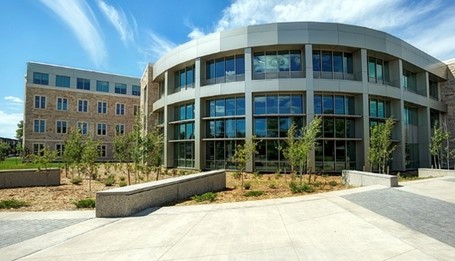
Department of Psychiatry
Royal University Hospital, Ellis Hall
103 Hospital Drive
University of Saskatchewan
Saskatoon, SK S7N 0W8
Graduate Chair
Email: biological.psychiatry@usask.ca
- Department of Psychiatry
Learn more about the academic unit offering this program - Program and Course Catalogue
To view official admission and program requirements